Understanding Chase’s 5/24 Rule

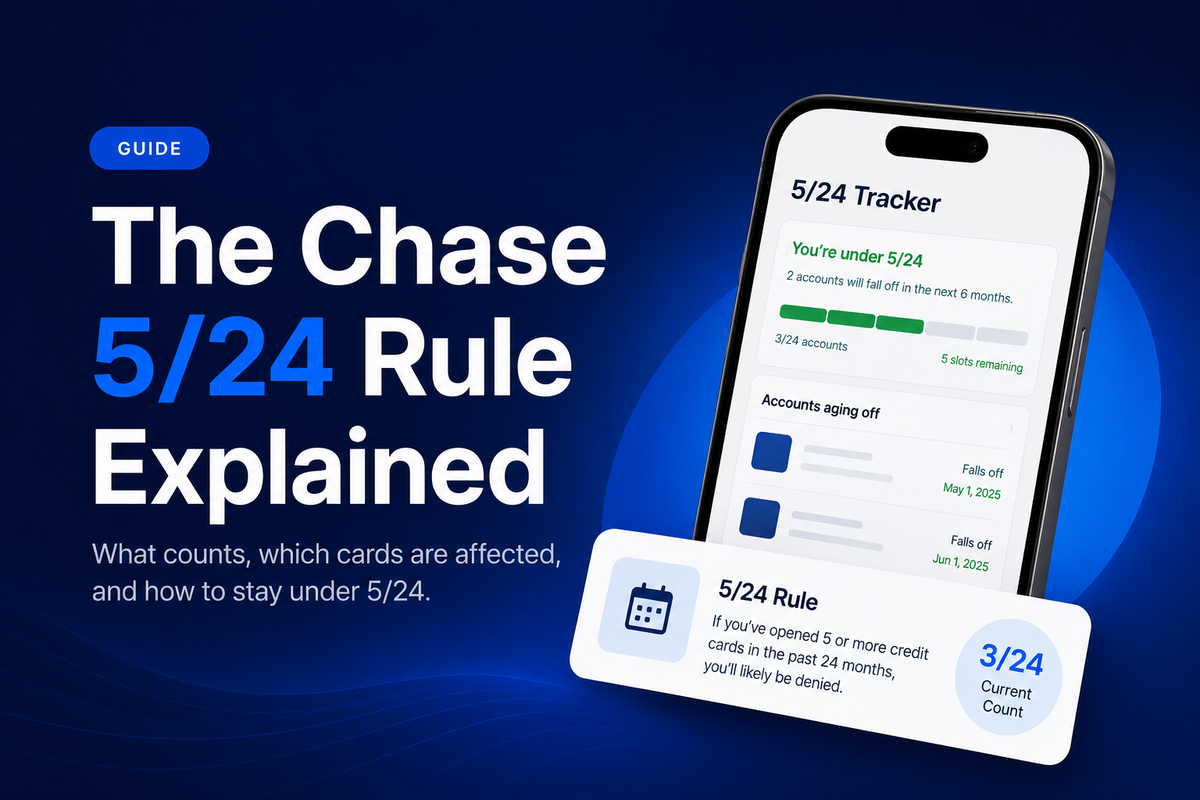
If you’re applying for Chase credit cards, the “5/24 rule” is one of the most important approval rules to understand.
At a high level:
If you’ve opened 5 or more credit cards in the past 24 months, Chase will likely deny your application for many of its cards.
This rule is unofficial, but it’s widely enforced across most Chase personal and business cards.
What Counts Toward 5/24?
Chase looks at all new credit card accounts appearing on your personal credit report — not just Chase cards.
Generally Counted
- Personal credit cards
- Charge cards
- Authorized user accounts
- Store cards with a major payment network, like Visa, Mastercard, Amex, or Discover
Generally Not Counted
- Mortgages
- Auto loans
- Most business cards that do not report to personal credit
- Store-only cards that can only be used at one retailer
Denied applications do not count because no new account was opened.
What Chase Cards Are Affected?
You should assume most Chase cards are subject to 5/24, including:
- Chase Sapphire Preferred
- Chase Sapphire Reserve
- Chase Freedom Flex
- Chase Freedom Unlimited
- Ink Business Preferred
- Ink Business Cash
- Ink Business Unlimited
- World of Hyatt
- IHG One Rewards
- United cards
- Southwest cards
- British Airways, Iberia, and Aer Lingus cards
- Amazon cards
In practice, being under 5/24 is usually the first gate for Chase approvals.
Sapphire Bonus Eligibility Has Changed
Chase has also changed how it treats welcome bonus eligibility for the Sapphire Preferred and Sapphire Reserve.
Previously, Sapphire bonus rules were often treated as connected across the Sapphire family. Now, Chase appears to treat the Sapphire Preferred and Sapphire Reserve separately.
That means:
You may be able to earn one welcome bonus on each Sapphire card — one Sapphire Preferred bonus and one Sapphire Reserve bonus — even if you currently hold the other card.
For example:
- If you have the Sapphire Preferred, you may be able to apply for the Sapphire Reserve and receive its bonus.
- If you have the Sapphire Reserve, you may be able to apply for the Sapphire Preferred and receive its bonus.
The key limitation is that Chase may treat each Sapphire product as once per card lifetime.
So if you already received a Sapphire Reserve bonus before, you may not be eligible for another Sapphire Reserve bonus. If you already received a Sapphire Preferred bonus before, you may not be eligible for another Sapphire Preferred bonus.
There are some data points suggesting very old bonuses may eventually reset, but that is not something to rely on.
5/24 Still Matters
The Sapphire bonus rule is separate from 5/24.
Even if you are eligible for a Sapphire bonus, you may still be denied if you are at or over 5/24.
Think of it this way:
- 5/24 determines whether Chase is likely to approve you.
- Bonus eligibility rules determine whether you can receive the welcome offer.
You need both to line up.
Business Cards and 5/24
Business cards are where strategy matters.
Many business cards from issuers outside Chase do not report to your personal credit report after approval. That means they usually do not increase your 5/24 count. However, you generally still need to be under 5/24 to be approved for many Chase business cards. This is an important distinction. For example:
- A Chase business card may not add to your 5/24 count after approval
- But Chase will still often evaluate your current 5/24 status during the application process
Chase business cards also generally do not report to personal credit after approval, but Chase can still see your Chase relationship internally. That’s why many experienced users prioritize Chase applications early before opening too many personal cards elsewhere.
Authorized Users Can Complicate Things
Authorized user accounts may appear on your credit report and count toward 5/24.
If an authorized user account is pushing you over the limit, Chase may be willing to reconsider in some cases, but it is not guaranteed.
How the 24 Months Are Calculated
Chase often appears to count by calendar month, not exact day.
Example:
- Card opened May 18, 2024
- Safer application window may begin June 1, 2026
If you’re close to dropping under 5/24, waiting until the next month is usually safer.
Common Mistakes
Applying Too Early
A card may still count even if it feels like 24 months have passed.
Forgetting Authorized User Accounts
These can unexpectedly push you to 5/24 or higher.
Confusing Approval With Bonus Eligibility
You can be approved for a card but still be ineligible for the welcome bonus.
Burning 5/24 Slots Too Quickly
Opening too many personal cards early can block better Chase opportunities later.
Shufl Tip
Shufl tracks your 5/24 status so you can see:
- Your current count
- Which cards are aging off next
- When you’ll drop below 5/24
- Which player in a household setup should apply next
- Whether a Chase move fits your broader card strategy
For Chase cards, timing matters. Shufl helps make that timing visible.